Showing posts with label foreign. Show all posts

Trump's speech signals a change of USA's Pakistan Policy

  • 0
"Civilization begins with distillation". Long before Bharat became the frequent target of invaders from Central Asia, Afghanistan was under the Mauryan Empire where special alcoholic drinks were prepared and exported to the rest of the continent.
Distillation is necessary in some aspects of present day Afghanistan, especially when it comes to approach of United States. Observers of Donald Trump’s speech on Afghanistan and South Asia may categorize it as:
  • Continuing the interventionist policy of USA.
  • No clear policy on withdrawal of troops.
  • Change in stance on Pakistan.
  • Nothing more than rhetoric of American exceptionalism.
The other one, often missed by editorials of American newspapers, is the dilution of post-cold-war attitude of USA towards India with respect to geo politics. For many years after the Cold war, USA has seen India with old lens as India was close to Russia during the Cold war.

Indian Frontier Policy - Tournament of Shadows

  • 0
"Tournament of Shadows" as many called it was the rivalry of British Empire and Russian Empire in their pursuit to dominate Central Asia.Though history text books seldom mention the "The Great Game" (Tournament of Shadows), as a history lover I felt that it is an interesting topic to ponder over as for over a century, Central Asia still remains a Geo-political-strategic mystery. Tournament of Shadows had similar features like Cold War and doesn't have a precise starting date. The end of this quest to dominate Central Asia was followed by World War 1, World War 2, Start of Cold War, End of Cold War and "War on Terrorism", all the previous event which got mentioned had active participation of Russia and Britain either as an ally or a foe.


Thirty Years' War (1618-1648) which devastated Central Europe culminated with the 1649 Westphalian sovereignty where European powers agreed to respect the sovereignty of their neighbors didn’t transcend into Central Asia and the Indian sub continent. India was a precious territory and European powers were more than enthusiastic to posses India.

When keys are handed over to the new owner of 10 Downing Street, there is an unwritten custom where the predecessor passes on vital verbal advice to his successor - for example "Keep your hands away from Central Asia". Lessons learnt by Soviet Union for their misadventure in Afghanistan are now being taught to America. White House is calculating the number of days left for American soldiers to leave Afghanistan a midst the incomplete goal to destroy Al-Qaeda, unresolved aim to stabilize the democratic government of Afghanistan and unachieved target to confiscate the presence of Taliban in Afghanistan.

India was British Empire's jewelry which it used to flaunt proudly before the world but they were constantly on vigil as they feared that they can lose their precious possession if they cannot contain Russia in Central Asia.


North West frontier of India was dominated by Sikhs, but their decline started with Sino-Sikh war followed by the results of first and second Anglo-Sikh wars, where the British eventually got hold of small but crucial part of Central Asia. John Miller Adye was a British General who served during the Crimean War (fought between Russia and Britain), India's First War of Independence (1857) and he took part in British Empire's progress in India’s North West frontier. General Adye gives an awe-inspiring description of British Empire's policy in India on the North West frontier in his book "Indian Frontier Policy" first published in 1897

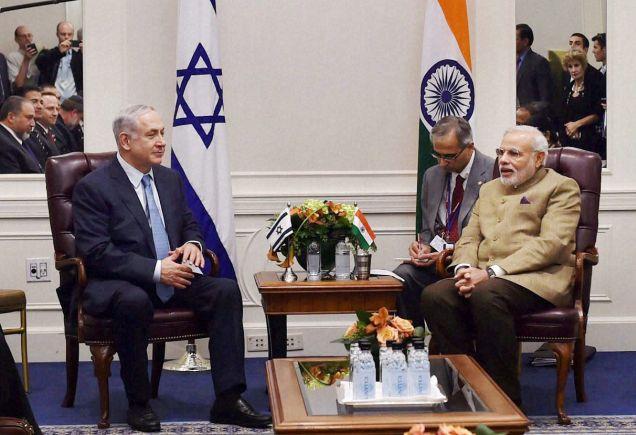
India Israel and Mannequin Diplomacy

  • 0


India’s first Prime Minister Jawaharlal Nehru had very little interest in developing good relations with Israel; the Non-Aligned approach of Nehru had ended him criticizing Israel on the issue of Partition, the Sinai conflict and one which didn’t allow Israel to join the Non Aligned movement. He eventually took the side of the Arab nations for “unknown reasons”.

Mrs. Indira Gandhi like her father was in favor of supporting the Arab Nations over Israel, she ended up criticizing Israel on the Six Day war, started active relations with Palestine Liberation Organization, aggressively condemned Israel on the Lebanon war but later became sensitive towards Israel and quietly started back channel diplomacy with Israel. Her son and successor Rajiv Gandhi extended the back channel diplomacy which lead to some economic engagement and eventually improved relations with Israel.

Beloved Sisters

  • 0

Perhaps, "Beloved Sisters" is one of the delightful films which I have seen for a very long time. Its like watching series of episodes of your favorite TV series, yet doesn't bother you with time - its fast in its pace of storytelling - yet it maintains the intimacy, doesn't exude the periodic visibility on screen but still captures the essence of history

Oil vs Dollar – Its affects on world economy

  • 0


Note 1: In world every good has a price, demand side and a supply side. The higher demand OR lack of demand hints supplier to increase OR decrease price of a good accordingly.

Note 2: Someone told you "An apple a day keeps doctor away". Now you decide to eat apple and you think its nutrients rich. People like you think similarly, such that, apple gains prominence.

Now combine above two NOTE and read on. You have 100(some currency) with you and you went to market on a bicycle to buy apples. Seller says each apple is 12, you bargain badly with seller. Finally both of you agree on 10 per apple, and you bought 10 apples for 100. Both seller and buyer are happy (don't worry about how much it costs for the seller; limit your imagination to this transaction under current market conditions of this buyer and this seller). Now someone goes in a BMW car to buy apples from the same seller, this guy will not bargain and buys at 12 per apple. Essentially 100 fetched buyer1 10 apples, for buyer2 8.333~ apples.

What if apples production is scarce? Now seller will not heed to buyer 1 bargain and for buyer 2 this seller might quote a higher price (say 15). In this scenario buyer1 gets 8.33 apples for his 100, buyer 2 gets 6.666~ apples for his 100.

What if there are abundant apples? Now this Seller might drop the price to 10 per apple. Buyer 1 will still bargain for 8 per apple and gets 12.5 apples for 100. Buyer 2 will get 10 apples for his 100.
Moral of the story is, any "Good" be it apple, t-shirt, gold or Oil, the price of it is determined based on goods availability, the quality of goods, suppliers greed, purchasers bargaining ability, purchasers financial ability etc.. Which are called market forces. With this knowledge lets now try to understand recent trend in decreasing Oil prices, how it affects $, how it is affecting Russian Ruble and Indian Rupee.

The Past

  • 0

I had humongous expectations on Asghar Farhadi's "The Past" as his previous Oscar winning film "A Separation" was a sweet blow to me. I don't remember the works of any other director who has given me the experience of thrill while watching films of 'drama' genre. Like "About Elly" and "A Separation", "The Past" is also a thriller which revolves around issues of marriage, divorce and suicide.

Asghar Farhadi's alacrity in expressing the emotional pain of all the characters including the children is confabulate and at the same time it is blunt to the point. The first scene where the couple talk to each other with signals at the airport with a glass in between them and the last scene where life and love is tested, encapsulate the essence of the film. I think Asghar Farhadi is one of the best writers in World Cinema. "The Past" is a must watch.

Blue Is the Warmest Color

  • 1

You may not like the genre, you may not like the theme, you may not like the style, you may not the taking, but can you stop yourself from not liking the performance of Adele Exarchopoulos?. "Blue Is the Warmest Color" is easily one of the best films of 2013. The film right on to your face without any regard for your inhibitions and it would take time for a normal viewer to get adjusted to the explicit material in the film. Abdellatif Kechiche pulls off this extraordinary stunt to capture the minute emotions in this non-typical narration. Watch  "Blue Is the Warmest Color" for mesmerizing performance of Adele Exarchopoulos. No wonder she was awarded the Palme d'Or at Cannes.
  • 0


During his visit to Chile, Barack Obama said, "I think it’s important, though, for us, even as we understand our history and gain clarity about our history, that we’re not trapped by our history". NO is a film about the historic plebiscite of 1988 on whether General Pinochet should stay in power for another 8 years and the role played by Television Advertising.

The important things which grew in the last 2 decades are Television and Internet. Both have shown enormous penetration and its influence. In India, both have taken a different path in the course of time. News has important place in both these areas and they have dramatically changed in the past 2 decades. From Arun Shourie's crusade against corruption by coming with a front page headline of "Good Morning Prime Minister" to a news channel doing a fake interview with a Bollywood star in his car asking about his political inclinations and on who is the best Prime Minister candidate in 2009.

Chile is a thin strip country on the west coast of South America. The plebiscite of 1988 is a divided into two groups, YES of General Augusto Pinochet who came to power by a coup and the NO camp who are a formation of several opposition parties who want to bring back democracy. The YES and NO camp would be provided with 15 minutes on Television for 27 days to come with their advertisements. The NO camp approaches a brilliant advertisement creator Rene Saavedra played by Gael García Bernal. Gael García Bernal is one of the very few young actors who travels continents with his talent. Be it with the Mexican film about dogs 'Amores perros', to act like a transgender in Pedro Almodóvar's 'Bad Education' and as a Chilean in 'NO'.

The first scene of the film made me feel that there was something wrong with my eyes but later realized that the whole film was shot with Sony U-matic magnetic tape to get the feel of late 80's. The decision to shoot the film with magnetic tapes had divided the critics but i felt that it was a smart decision and it added the impact which the filmmaker was intending for.

A Separation

  • 0

What is with these Iranian films which question the modern aesthetics of film making? They seem to question us unintentionally, but as a movie lover, it’s hard to ignore them. Asghar Farhadi’s ‘A Separation’ which won the ‘Academy Award for Best Foreign Language Film’ amidst ‘The Artist’ which was rewarded for being silent and ‘Tinker Tailor Soldier Spy’ was victim of bad luck.

The film starts with passport and visa documents getting scanned and later a still shot of two couple who are in the front of a judge arguing about divorce. Later we are presented with an old man who needs help, a daughter who is in the middle of her parents who have applied for divorce and a simplistically simple plot.

The screenplay of the film is brutally honest and it dips the viewer into the plot with ease with series of conversations, accusations and emotional reasoning. The reference of religion, the trauma of the families, the shaking thought of absolute morality and the provocations of love are so neatly executed that it’s hard to get distracted even for a second. Goodness is sometimes asked to pay its price for just to pass the test of innersole, the conscious opportunism is juxtaposed with the burden of morality, and trying to create passionate symphony of emotions is beyond brilliance.

Akira Kurosawa's Dreams and Sexuality

  • 1
Yume: A Fascinating Phantasmagoria

What are dreams? Are they mere incongruous vignettes? Or perhaps obscure series of visuals that border on meaninglessness? Why does a dream occur at all? As expounded by Sigmund Freud and psychologists, who took after him, the answers to all these lie in our unconscious. Freud explicates in his Interpretation of Dreams that dreams are ‘dramatized’ expressions of ideas latent in our unconscious. Psychoanalysts perceive dreams as complex texts made up of repressed desires, memories and encounters, which come together to weave an intricate pattern of images. A dream is far from being real and is yet a hyper real metonymic representation of the dreamer's reality. A dream is il veut dire or ‘a want to say'. Herein lays the semblance between oneiric imagery and filmic montage. What are films but endeavors to connote reality from a chosen perspective, aided by the use of visuals? The similarity is perhaps tacitly acknowledged by Freud as he compares the psychic apparatus with the camera. If a film is a dream fashioned in celluloid, a dream would be a film, where the dreamer is both the creator and the spectator – an idea that Buster Keaton shall play upon in Sherlock Jr.

Given this close correspondence, dreams have often become significant subjects of scrutiny in films. Akira Kurosawa’s Dreams or Yume would provide a typical example in this context. The film met with mixed reception on its release in 1990. While some critics have been contemptuous others have admired the director's creative introspection. 
Hal Hinson of the Washington Post accuses Kurosawa of an almost profane pretension of profundity tagging the film as “pontification” and “a snooze”. He goes on to say that “Dreams seems to emerge more out of the superego than from the id.” He opines “The real problem with Akira Kurosawa's Dreams may be simply that the director's instinct to continue making films has outlived the inspiration needed for them to be worth the effort.” Vincent Canby of the New York Times, however, sees this film as “sublime” and “astonishingly beautiful”. For Canby the film stands out as an attempt where “the magical and the mysterious are mixed with the practical, funny and polemical.”
Popular opinion over the past two decades has not been so favorable about Yume. Underrated for being grandiose, lofty and preachy the film is seen as a failure in the Kurosovian oeuvre. The film has been critiqued for being a disappointing socio-philosophical commentary. Detractors of the film have fallen short of realizing that dreams are not quite about ‘what they are’ but about ‘what they suggest’. As reviewers have kept themselves busy with the ‘obvious’, what these sequences implicate has been ignored.


While incoherence has been one of the allegations against Yume, use of an entwined and connected cluster of images that pervade the film makes the unity discernible to an eager viewer. Use of visual symbols implicitly indicative of sexuality makes this film an account of a progression towards sexual growth for me.


The first of the eight dreams is Sunshine through the Rain. It starts to rain as a somber young child comes out of his house in quick steps. We as viewers cannot but think over this scene as one suggesting birth, where the house and the rain perhaps come to signify the womb and the breaking of the water. Having been born the child must now set forth on a journey to arrive at the awareness of the self. Thus despite being warned against the forbidden the boy goes to the forest to confront a wedding procession of the foxes. In Freudian parlance a dark forest has always come to symbolize the id. The foxes here come to imply the instinctive virility dormant in the child himself. As human beings masked as foxes march past the trees, their synchronized moves creates a feeling of the uncanny or the Lacanian extemité: that which is most intrinsic to us is the most fearsome as well.
Our suppressed sexuality can assume frightening dimensions if it ever becomes foregrounded. Having had his first sexual encounter, the child returns home only to find that the umbilical ties with his mother has been severed; he would not be allowed to recede back to the womb. Instead the mother passes on to him a knife that an angry fox has left for him. While the knife as a symbol is overtly suggestive of the phallus, it is also the weapon to carry out castration. For the child who has already been initiated into sexuality, life from now on shall be a negotiation between the libidinous, potent life force and the fear of castration and eventual death. The dream ends with the boy walking towards the rainbow to meet the foxes. The mythical association of the rainbow with Izanami and Izanagi, the male and the female forces of both creation and destruction in Japanese culture is a minute detail that shouldn't go unnoticed here.


The castration complex shall persist in the second dream named The Peach Orchard. Set in spring with its usual connotation as the season for mating here we find a slightly older lad enticed to the peach orchard by an illusive girl. This dream is a curious admixture of serious elements and child's fantasies. The dolls he has seen in his sister’s playroom come alive in a psychedelic sequence. As the dream unfolds, we come to know that his family has cleared off the peach trees from the orchard and these dolls, who claim to ‘spirits of nature’, are thus aggrieved. The family, here perhaps comes to imply the rule of the patriarch or the society, which demands the perpetual projection of the super ego and hence is intolerant to any lapses into the id. The family thus stands antagonistic to the ‘spirits of nature’. The boy is however allowed a glimpse of the peach orchard in full bloom by the dolls, but the fear of being castrated becomes conspicuous as the vision dissolves and the boy meets the reality of the cut off trunks. 
The girl by now has transformed into a peach tree, the only one in bloom. The dream concludes on a wistful note despite the touch of hope. The boy caught in a close-up is shown shrouded in pain – the pain of shedding off innocence.
As an almost natural consequence of the loss of innocence comes the thought of death. The third dream of the sequence deals most palpably with death. This dream called The Blizzard shows four mountaineers caught in a snow storm. As his companions succumb to the difficulties, the leader of the group tries to keep up their spirit. The peak (yet again a phallic image) must be conquered. Amidst the storm arrives death as an enchantress, who promises the warmth of ice at the denial of the flame of life. The captain is momentarily seduced by death. The lure however wears off immediately. Love is not a perverted immolation of the self but the lust to live on. As the storm ceases the camp becomes visible. The fluttering red flag representing the zeal for life is in stark contrast to the icy blue of death that is the dominant color of all the preceding frames. eros has yet again gained victory over thanatos.


The forth dream that follows is named The Tunnel. This is said to be made by Ishiro Honda. But the change in craftsmanship is not so obvious. This dream is beyond doubt the filmmaker’s indictment against the futility of the carnage called war. The dialogue between Major and the dead members of the annihilated third platoon, where the former admits his callousness is heart wrenching. But the dream goes beyond being just a critic of war. 
The arch of the tunnel as the major stands in front of it makes one recollect the arch of the rainbow in the first dream. The association becomes stronger as we look at the howling hound, which at once reminds a keen viewer of the angry foxes. The tedious walk along the tunnel is almost emblematic of a journey through the portal of birth. Having gained victory over death in the third dream this is perhaps a rebirth. As the major commands the dead soldiers to march back to their graves an act of exorcising the death drive present in himself takes place; a step forward in the journey towards the instinctive self.
The fifth dream titled Crows begins with an extreme close up of Vincent Van Gogh’s self portrait. The multiple frames; that of the camera, the screen and the portrait piled together at once make the artist's intent perceptible. This shall be a postmodern take, where the artist deploys art to comprehend art itself. ‘I’ enters into Van Gogh’s canvas and walks through his paintings to meet the painter at last. Kurosawa’s casting of Scorsese, who is himself a filmmaker as Van Gogh is itself laden with suggestions. As ‘I’, who too is presented as an artist meets Gogh; it is almost a meeting with the self. Scorsese, a filmmaker, acting as Van Gogh a painter perhaps represents Kurosawa himself on the screen. The discourse under analysis here is the relation between art and life. Van Gogh tells ‘I’ that he “consumes” nature to create his works. While the very fact that we meet the painter in his painting suggests the reverse – art consumes the artist. The relation further complicates as Van Gogh tell ‘I’ that he ripped of his ear as he was not being able to sketch it properly in his self portrait. Is it art or life, which is of greater significance? The question remains unresolved. Here too the central theme of the sequence – the conflict between the vitality of life and the fatal forces of extinction is palpable. The dream ends in Van Gogh’s The Wheatfield and the Crows. As the painter walks out of the frame, a flight of crows bursts forth, their raucous noise almost suggesting a carcass in the vicinity. The Wheatfield and the Crows is often considered the last painting by Vincent Van Gogh before his death. Use of Chopin’s Prelude No. 15 that was nicknamed by Cortot as But Death is here, in the Shadows as a background score to this dream further accentuates the association with death. But it however, must not escape a discerning viewer that the crow or the raven is associated with the creation myth in Japanese culture. Thus life has yet again defeated death. Even while death as a looming presence cannot be overlooked, life nevertheless proceeds at its own rhythm and it is man's urge to live on that makes this possible.


The sixth and the seventh dreams are titled as Mt. Fuji is Red and The Weeping Demon respectively. They are nightmares presenting before the viewers a dystopia. Both the dreams are apparently about the nuclear holocaust and its repercussions. While the environment remains a major concern with the director, these two dreams are also about perversion and distortion of human potency. This is a world where orgasmic outburst of vitality has been replaced by an erupting nuclear plant, which shall obliterate life. A Garden, where once beauty shall reside has become a barren wilderness. Mutation has morphed flowers into demonic presences that rouse fear. Men have grown thorns (suggestive of a deformed phallus). As the journey towards growth nears its culmination, these are instances when man must confront his perversions to come in terms with those.

The last of the dreams is The Village of the Watermills. In an idyllic, nameless village death and life shall be reconciled at last. The turning watermills come to suggest life reaching a full circle. ‘I’ shall at last reckon his own fulfillment in the philosophical grandsire whom he meets. The old man makes him realize that man is but a part of nature and thus must be in awareness of his natural being, which civilization often robs off. The setting is utopic and far from achievable reality. It nevertheless fits into the structure of the film seamlessly. His journey has culminated in a recognition of his potent passion for life. The free flowing canals represented his uninhibited libido that eggs him to live on (and to procreate perhaps).
Despite being apparently disparate, the eight dreams beaded together resemble a sequence of haiku lyrics; short and yet independent narratives, they together constitute a layered and multivalent filmic text, where Japanese cultural elements like the Kabuki and Noh styles of theatrics, folk music of the land and Japanese mythology have been put into effective use to create the magic realistic texture.
--By Priyanka Mukherjee

CACHE - Nothing is HIDDEN

  • 0
Most of the film viewers try to find the 3 M's in a film ,Does a movie need to have a Motive? Message ? Meaning ?. Michael Haneke's 'Cache' is a film which defines the 3 M's without any definition.Accidentally four years ago i watched Michael Haneke's 'The Piano Teacher' which made a profound impact on me for its disturbing narration without violence and the shadow of darkness lingering in the film. 'Cache' is a similar kind of disturbing film which is infused with terrific images.


Georges Laurent(Daniel Auteuil) and Anne(Juliette Binoche) are married couple with a son Pierrot. The film starts with a long static shot with some credits on it, this static shot is actually the video sent by an anonymous man?, the first video shows that Georges house is under surveillance, when Laurent and Anne watch the first video tape Laurent says 'How come i didn't see him' referring to himself in the video. Later they receive some comic drawings which look intimidating,even Pierrot receives it and asks his father 'Why did you send it to school?'

In the next videotape Laurent's childhood home is filmed and he visits his old home where his mother stays who is battling with old age illness,there some important conversations take place.The next videotape leads to a man named Majid who is connected to him in his childhood and Laurent accuses him of sending the tapes which he denies.The way events unfold after this is tragic,horrific and disturbing without letting us know the truth behind the mystery.


I cannot write the whole plot and synopsis here because it will be a spoiler and might decrease the thrill and intensity when you watch the film.The undercurrent of the film is the unseen horror and the disturbing theme which holds on us till the end of the film.Even though the mystery is unexplained the point Michael Haneke makes in the film is clear cut.Haneke shows the hidden and makes a point of what can happen and what is to happen when something is hidden and how things get unnoticed even though they carry much importance and meaning.

Haneke shows what is hidden and hides what we are interested in seeing but everything can be seen if one really wants to see it. Laurent hides some facts with Anne,Pierrot hides something from Anne, Anne expresses her motherly love to Pierrot,Laurent hides his emotion before his wife and others when he cant find Pierrot but ultimately cries in the kitchen,Haneke makes his point in Cache but to understand his point we need to remove our hidden eyes .

Like David Lynch's 'Mullholland Drive' Cache plants innumerable questions in our mind , though we might never comprehend them 100% but the beauty of these films is that they create a silent impact which increases our intrigue towards finding the truth and searching for 3 M's .

-- Did you see Manmohan Singh and Sonia Gandhi in the film?


Do not proceed from here if you haven't seen the film.

1. The film starts with the first videotape and some titles appearing on it,if you are attentive and are blessed with normal vision you can see the title CACHE embedded in it.

2. The conversation between Laurent and Anne while watching the first video referring to himself he says 'How come i didn't see him' .

3. The first video hints that the camera is not hidden and might be an act of voyeurism.

4. Watch the scene in which Laurent meets Majid is there an act of indirect voyeurism?.

5. The videotapes are infused with some images of a boy,which suggest something to us.

6. Listen to watch Majid's Son says when he confronts him in his office.

7. The last and the long static shot where Pierrot meets Majid's son.

and many more..

The above hidden elements and many other hidden elements throw questions instead of answers,the questions are the clues to find the hidden answer (s) ?

Jules and Jim(1962)

  • 0
The Unusual TRAGEDY
I read the book 'HITCHCOCK' 3 years back as i am a big fan of Alfred Hitchcock.'HITCHCOCK was written by Francois Truffaut,at that time i did not watch Truffaut 's films but the book has made me watch his films as his insight towards films and his critical analysis impressed me a lot and there it started my journey towards films of Francois Truffaut.

My first Francois Truffaut's film was '400 Blows' which i am not gonna discuss here but i am gonna throw my thoughts on his two wonderful films 'Jules and Jim' in this post and 'Two English Girls' in the next post and also the similarities between these two films.


Jules and Jim are two friends who fight for different sides of the World War 1 and they meet a girl called Catherine,who likes both and both Jules and Jim love Catherine. Jules loves Catherine and they get married and have a daughter,Jim visits Jules and Catherine and he develops a relationship with Catherine.... this sounds like a normal story but the real pleasure of watching this film comes after Catherine develops a relationship with Jim.


We cant even predict the next scene,we don't know weather she will go with Jim or Jules,with whom she will share the bed,will she marry Jim?,will she leave Jules and her daughter?,will Jim leave Catherine?,will Jules leave Catherine and Jim for the sake of friendship and for his love towards Catherine?, or will the three stay together?

Every scene is like a simple and a silent twist without any huge impact on the screenplay and the story,these three live together for a period of time and Jim tells us that villagers called them as lunatics.Jules is loved by Catherine but she is unhappy with the marriage and tries to have an affair with Jim with the knowledge of Jules,Jules loves Catherine but he is not sure what to do as his love and friendship collide, even though its an unhappy marriage with Jules,Catherine loves Jules.Its funny that we see Catherine spinning her relations with Jim and Jules which are from a confused heart.Jules is in the favor of Catherine having an affair with Jim as Jim is his best friend and wants to see Catherine happy.


The confused plot is the amalgam of wonderful emotion between the three characters who cant live without each other and finally there can be only one perfect ending to such a story,its the TRAGEDY . The tragedy in the film makes it a perfect ending,the tragedy needs to be triggered by one of the characters and the there will be an innocent victim too.The true and complete pleasure of watching 'Jules and Jim' can be felt when we understand the characters and the relationship between Jules,Jim and Catherine.

Best Foreign Films of 2008

  • 0
I am listing out the best Foreign Films of 2008 which I could lay my hand on.The term “Foreign Films” means Non-English films,they might be even Indian films.


I’ve Loved You So Long
Original Title: Il y a longtemps que je t’aime
“I’ve Loved You So Long ” is a very rare film which we find these days,it reminded me of Ingmar Bergman films. “I’ve Loved You So Long ” is a film which is filled with emotions of a depressed sister who is released from jail,feelings of a younger sister who she used to love when she was a child,pain of Juliette Fontaine which she never exudes.The film wonderfully depicts the sense of alienation with in a women,the difficulties of life,the desperate attempts of Léa Fontaine to make her sister feel the love and affection which she has towards her and Juliette’s encouter with every day life by facing the truth that she has lost the most loved one.Director Philippe Claudel makes a remarkable debut by handling and balancing such a sensitive story.

Amelie(2001)

  • 0
Amelie is directed by Jean-Pierre Jeunet .Amelie is the story of a young women and how she deals with an unexpected accident. The story looks simple and complex. The story might not be the attractive element of the film, but the way the story has been treated by Jean-Pierre Jeunet is wonderful.
Amelie has been brought up very cautiously by her parents due to some misunderstanding and she never had a normal childhood and she is lonely. One day she discovers an old box of a guy who used to live in her apartment and she decides to give him back the old box in order to make him and herself happy and she decides to make everyone happy and in this process she falls in love with a guy.


1900(1976)

  • 0
Orginal name:Novecento

Bernardo Bertolucci is one of the best writers of Italian Cinema. Bertolucci is the only one who can be counted with Federico Fellini, Sergio Leone and Luciano Vincenzoni as one of the instrumental people who elevated and enhanced Italian cinema to a different level. Sergio Leone always wanted Bertolucci to write the script besides Luciano Vincenzoni, but he never got the chance of writing the script for Sergio Leone. In fact he was asked by Sergio Leone to write the story and script for "Once Upon a Time in the West", but later he was just asked to devise the story and not the script as Sergio Leone felt that the script would be too cerebral for American audience.

 Bernardo Bertolucci is the only director who can verbalize 'The Proof of Love' in the most innovative way. He makes his convictions of sexual love in an uncompromising manner which is clearly visible in his works like 'Last Tango in Paris', 'Stealing Beauty', and 'The Dreamers'. I felt that Bertolucci is the perfect director who can infuse politics into films in the perfect way after watching 'The Conformist (1970)'. Bernardo Bertolucci is the only director who never compromises on issues like Politics, Sex, Nudity and Incest in his films.

 1900

 '1900 'or Novecento(Italian) is the lengthiest film I have ever seen. I was told that I cannot find the Director's Cut version of '1900' but fortunately or unfortunately I did find the '302 minutes, 49 seconds 'version which is slightly less than the original one which is 311 minutes.
 '1900' is an epic film directed by Bernardo Bertolucci. It tells the story of 2 friends during the 1900-1945 period. Robert De Niro (Alfredo Berlinghieri) and Gérard Depardieu (Olmo Dalcò) are born on the same day in 1900. Alfredo is born to the family of Landlords and Olmo is a peasant son.

Part1

In the part1 of '1900' Bernardo Bertolucci shows the Social community of Italy. He tries to show the way in which both Alfredo and Olmo are grown in their respective communities. The first part is reserved for portraying the situation of Italy, the pathetic nature of the workers and peasants. The first part also depicts the families of both Alfredo and Olmo. The family of Olmo works in the fields of Alfredo.


Caramel(2007)

  • 0
I came to know about ‘Caramel’ when i was looking at the list of winners of Asia Pacific Screen Awards(2007).When i decided to watch the movie i was a bit suspicious about the credibility of the film,but it turned out to be a wonderful experience.
Caramel is a film about Lebanese women who work in a Beauty salon.The film deals with the lifes of five women who are very different from each other.The film is directed by Nadine Labaki,who also stars as one of the women,.Unlike many feminist films Caramel does not show the hardships of women,it does not show the social issues related to women,it does not show the political issues related to women but Caramel shows the normal life and behaviour of common women.